EU Leaders Call the Digital Euro “An Idea Whose Time Has Come”
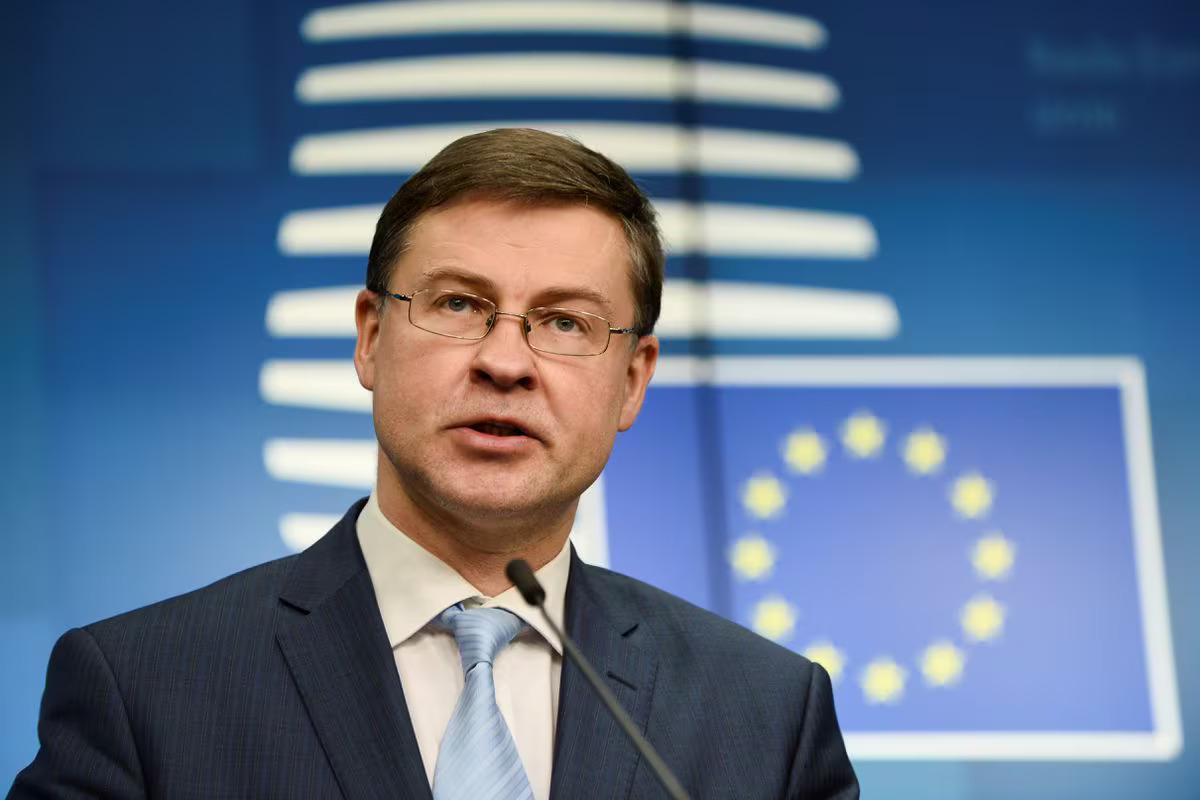
In a joint op-ed, EU Commissioner Valdis Dombrovskis and ECB Executive Board Member Piero Cipollone argue that Europe must modernize its currency to reflect rapid technological change. From barter to banknotes, European money has continuously evolved — and the authors emphasize that a digital euro represents the next logical step in this progression. While physical cash remains central to European identity and monetary sovereignty, the shift toward digital payments shows that citizens increasingly expect convenient, secure, and universally accepted digital options.
The op-ed stresses that the digital euro is not meant to replace cash, but to accompany it. As more Europeans shop online and use digital tools in everyday transactions, the absence of a public, cash-like digital means of gap in the monetary system. A digital euro would serve as a modern counterpart to banknotes, issued by the ECB, preserving public trust while meeting new expectations for efficiency, availability, and privacy.



This modernization effort is framed as a response to both technological transformation and changing consumer behavior. Europe’s payment landscape is evolving quicker than its monetary tools, and the authors argue that the euro must keep pace to remain relevant and resilient. The digital euro is presented not as a solely technological undertaking, but as a strategic evolution of Europe’s monetary infrastructure for the decades ahead.
Takeaway
What Would a Digital Euro Look Like Under the EU’s Proposed Framework?
The European Commission’s 2023 Single Currency Package outlines two legislative pillars: continued access to physical cash, and the creation of a legal framework for a digital euro. According to Dombrovskis and Cipollone, the will be free to use, simple, inclusive, and accepted for any digital payment across the euro area. A key design priority is privacy — offering protections that mirror the anonymity of cash as closely as possible within a digital environment.
The authors highlight several defining characteristics of the digital euro. It would work online for e-commerce and mobile payments, and offline to ensure continuity during outages or in locations without internet access. This ensures universality similar to physical euro banknotes. The ECB is also working on next-generation banknote designs to reaffirm that cash remains fully supported — an significant message for Europeans concerned about reduced access to physical payments.
By embedding the digital euro within existing systems and ensuring interoperability with private-sector answers, the framework aims to enhance Europe’s payments ecosystem rather than disrupt it. Private payment providers would be able to innovate atop a trusted public foundation, benefiting from increased stability, reduced fragmentation, and the ability to scale services across borders more easily.
Takeaway
How Does the Digital Euro Support Europe’s Strategic Autonomy and Future Readiness?
Beyond consumer convenience, the op-ed argues that a digital euro is crucial for strengthening Europe’s technological sovereignty. Today’s is dominated by non-European companies, leaving the EU dependent on foreign infrastructure for essential financial functions. As global tensions rise and supply chains fragment, continued reliance on external providers poses risks to economic security and policy autonomy.
The digital euro would provide a European alternative for digital payments, reducing external dependencies and giving the EU greater control over its financial architecture. This aligns with the broader EU strategy to enhance resilience across critical sectors, ensuring Europe can operate independently and decisively in a multipolar world. According to the authors, failing to modernize would leave Europe increasingly vulnerable to external shocks and technological shifts driven by others.
The coming years will be pivotal. EU leaders have urged lawmakers to complete legislation in 2026, enabling the ECB to prepare for potential issuance by 2029 and launch a pilot in 2027. With Bulgaria joining the euro area in 2026, the must meet the expectations of 21 member states and a rapidly digitizing global economy. The digital euro, they argue, is not an optional enhancement but an essential upgrade for Europe’s monetary future.
Takeaway