How Crypto Enables Micro-Subscription Business Models
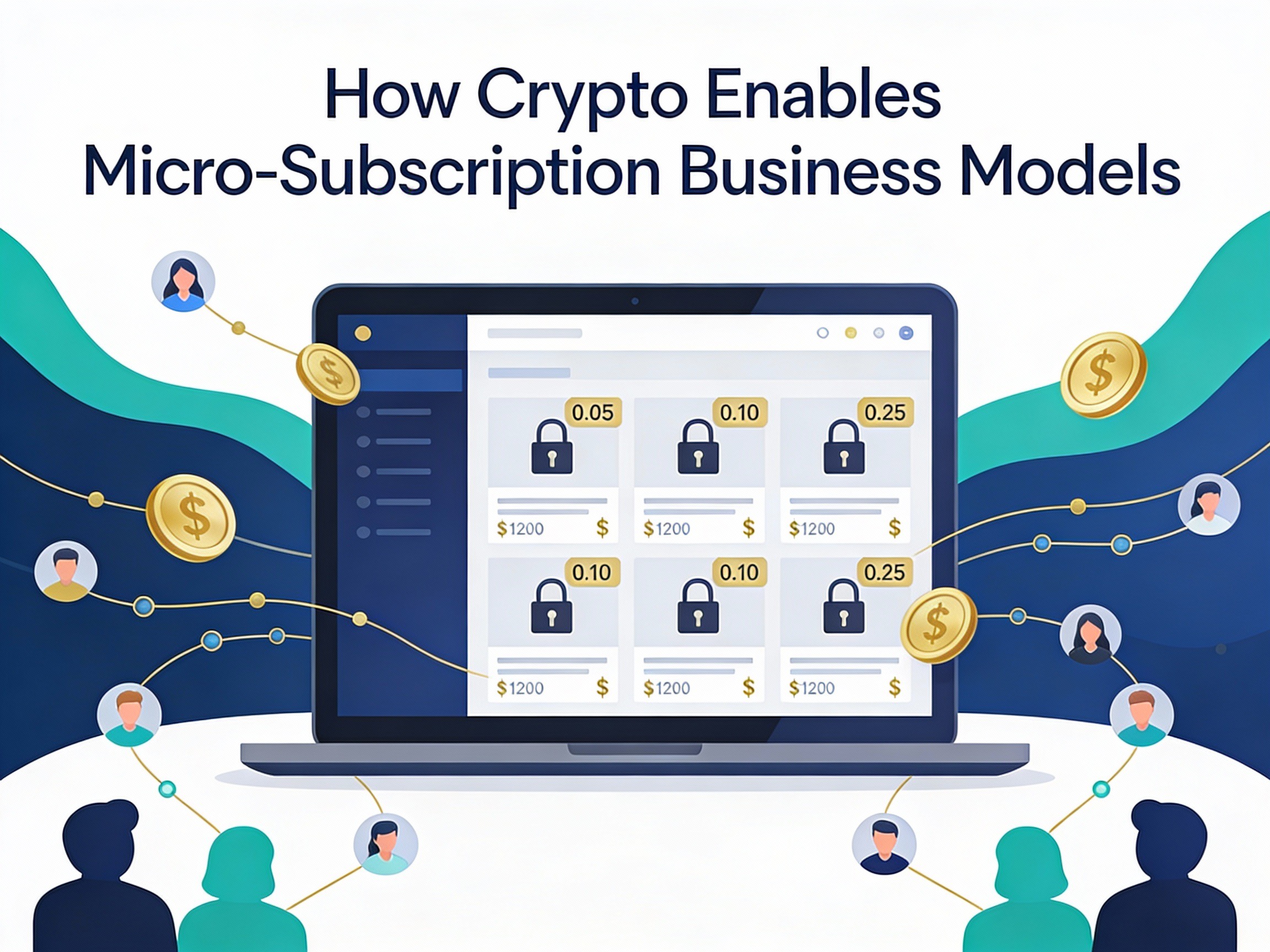
Micro-subscription business models enable users to pay small amounts of money regularly. It could be per-use, per-day, or access to a piece of content or a small feature. These models are becoming more well-known as digital products transition towards usage-based and flexible pricing.
However, traditional payment systems aren’t designed for small payments. Minimum charges, high fees, and sluggish settlement times make micro-subscriptions either impossible or expensive to run through card networks and banks.



In this article, we’ve explained how crypto enables micro-subscription business models. It covers why works well for frequent, small payments.
Key Takeaways
- Micro-subscription business modes focus on frequent, small payments tied to actual usage.
- Crypto enables micro-subscription business models by offering quick settlement, low fees, and global access.
- Stablecoins make pricing predictable for users and reduce price volatility.
- These models assist businesses reach more users while giving customers greater control over pricing.
Understanding What Micro-Subscription Business Models Are
These are pricing systems where users pay small amounts of money on a regular basis, instead of a large yahead or monthly fee.
Micro-subscription business models are designed around little, frequent payments tied to value usage, not long-term commitments. Therefore, instead of paying a fixed monthly amount, users pay when they want to access a feature or use a service.
These models operate in three ways:
- Usage-based pricing (pay per request or action)
- Time-based access (pay for short access)
- Feature-based access (pay to unlock specific tools or content)
The goal of this model is to match payment closely with the actual value received. For businesses, micro-subscriptions move revenue strategy from large upfront payments to low-cost, high-volume transactions. This approach is great for digital products where access can be easily automated, measured, and scaled without additional costs.
Why Traditional Payments Won’t Work Well for Micro-Subscriptions
systems were not created for frequent, small payments. Here are the main reasons they don’t work out when used for micro-subscription models.
1. High transaction fees
Banks and card networks charge percentage-based and fixed fees on every translation. If payments are very small, the fees can take up all or most of the revenue, making micro-subscriptions hard to sustain.
2. Minimum payment limits
Most payment providers do not permit very small charges. Therefore, businesses cannot offer actual micro-pricing for features, content, or short-term access.
3. sluggish settlement times
Traditional payments mostly take hours, days, and sometimes weeks to settle. This delay makes it challenging to manage usage-based or real-time access subscriptions.
4. Cross-border payment barriers
International payments usually involve currency conversion costs, extra fees, and regional restrictions. This makes global micro-subscriptions complex and expensive.
5. Chargebacks and payment disputes
Small refunds or disputes can cost businesses more than the original payment. This risk discourages organizations from using traditional payments for micro-subscriptions.
How Crypto Enables Micro-Subscription Models
Crypto eliminates most of the barriers that make micro-subscriptions challenging to run with traditional payments. It plays an significant role in making micro-subscription business models scalable and practical. Here are some of the ways crypto assists micro-subscription models.
1. Low transaction costs
Micro-subscription business models rely on collecting very small payments at high volume. Most blockchain networks offer low transaction fees, enabling businesses to charge tiny amounts without losing revenue to processing costs. This feature makes pay-per-use and short-term access models financially viable.
2. No minimum payment limits
Crypto doesn’t impose minimum charge amounts, unlike traditional payment systems. Hence, micro-subscription business models offer the flexibility to price services per minute, per action, or per request. Businesses can align pricing closely with real usage rather than forcing largeger subscription plans.
3. Global and borderless payments
Micro-subscription business models usually target a global audience. Crypto payments function across borders without international fees, currency conversions, or regional restrictions. This enables businesses to offer the identical micro-pricing to users in various countries with little friction.
4. Instant or near-instant settlement
quick settlement is crucial for a micro-subscription business model that depends on real-time access. Crypto transactions are confirmed instantly, enabling users to gain instant access to features or content later than payment. This enhances user experience and supports continuous usage-based billing.
5. Programmable payments with smart contracts
Smart contracts automate how micro-subscription business models work. They can track usage, handle recurring charges, and control access without manual processing. This feature reduces operational overhead, making it easier to manage a large number of small transactions.
6. Stablecoin support for price stability
assist micro-subscription business models to avoid price volatility. When businesses charge users in stable-value tokens, they can offer predictable pricing. This builds user trust and makes frequent, small payments easier to adopt and understand.
Types of Crypto-Based Micro-Subscription Business Models
Crypto empowers diverse types of micro-subscription business models by making frequent, minimal payments simple to manage. Here are the common models businesses use today.
1. Pay-per-use models
For this model, users pay a small amount every time they use a service. This could be per search, per API request, or per action inside an app. Crypto makes this possible by managing small payments with low fees, enabling businesses to charge when real value is delivered.
2. Time-based access models
Time-based micro subscriptions enable users to pay for short-access periods, like per day, per hour, or per session. Crypto payments settle rapidly, assisting platforms revoke and grant access in real time without depending on long billing cycles.
3. Content and creator micro-subscriptions
Creators can charge small recurring amounts for access to videos, posts, newsletters, or private communities. Crypto enables direct payments from fans without middlemen, assisting creators make money from global audiences via affordable micro-subscription plans.
4. Feature-based access models
Instead of making payment for a full product, users can unlock specific features without paying much. This model works fine for tools and apps that offer optional premium functions. Crypto enables flexible pricing without compelling users into large subscription plans.
Conclusion – The Future of Micro-Subscriptions
are becoming increasingly essential as users demand affordable, flexible access to digital services. Crypto provides the payment infrastructure needed to support these models at scale.
By eliminating borders, high fees, and payment limits, crypto enables businesses to experiment with new pricing strategies that were not possible before. As adoption grows, crypto-powered micro-subscriptions will likely play an significant role in how digital products and services are priced.