Why Digital Twin Crypto Could Transform Personalized Healthcare Systems
KEY TAKEAWAYS
- Digital twin crypto combines virtual patient models with blockchain-based data security.
- Patients gain greater ownership and control over sensitive healthcare data.
- Predictive modeling enables more accurate, personalized treatment decisions.
- Tokenized incentives support data sharing, preventive care, and medical research.
- Blockchain improves interoperability, trust, and efficiency across healthcare systems.



Healthcare is sluggishly moving away from treatment models that work for everyone and towards care that is tailored to each patient and based on data. Wearables, genomics, AI diagnostics, and remote monitoring are all making it possible for doctors to customise treatments for each patient.
crypto is a new idea that is coming up at the crossroads of blockchain and health technology. It could take personalisation to the next level.
Healthcare providers, patients, and researchers can make secure, verifiable, and constantly updated virtual copies of people by combining digital twin technology with blockchain-based systems. These copies can assist make better medical decisions, protect data privacy, and speed up the delivery of healthcare.
In this article, we explore what digital twin crypto is, how it works in healthcare, and why it could fundamentally transform personalized healthcare systems in the years ahead.
What Is Digital Twin Crypto?
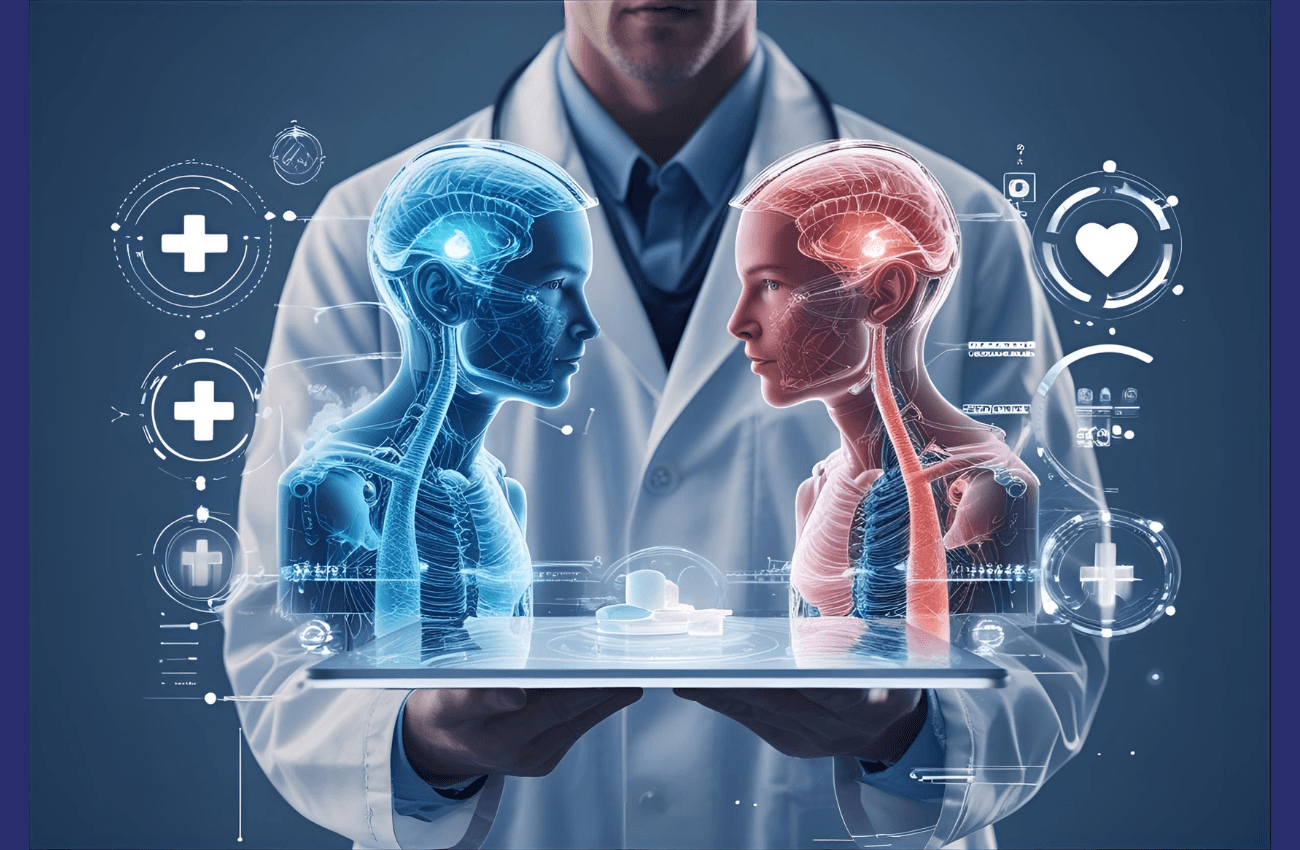
A digital twin is a virtual model that mirrors a real-world entity using real-time data. In healthcare, a digital twin can represent a patient’s physiology, medical history, lifestyle, and treatment responses. This model can be updated continuously using data from electronic health records, wearable devices, imaging systems, and lab results.
adds blockchain technology to this framework. Blockchain provides a decentralized layer for data verification, access control, and value platform.
Instead of storing sensitive health information in centralized databases, digital twin crypto systems use encrypted data references, smart contracts, and token-based permissions to manage who can access, analyze, or contribute to a patient’s digital twin.
The Role of Blockchain in Personalized Healthcare
underpins digital twin systems by providing secure, decentralized data storage, transparent access controls, and verified patient records. We’ll take a look at how blockchain ensures privacy, integrity, and interoperability in personalized healthcare.
Enhancing Data Ownership and Patient Control
One of the largegest challenges in modern healthcare is data ownership. Patient data is scattered across hospitals, labs, insurers, and apps, often without clear consent mechanisms. Digital twin crypto puts patients at the center of their data.
Through blockchain-based identity systems, patients can grant or revoke access to specific parts of their digital twin. A researcher may access anonymized metabolic data, while a physician views full clinical records. Every access request is logged transparently, ensuring accountability and trust.
Improving Data Integrity and Interoperability
decisions rely on accurate data. Blockchain’s immutable ledger ensures that data inputs into a digital twin are verifiable and tamper-resistant. This is particularly valuable when multiple providers contribute to a single patient model.
Interoperability also improves as blockchain standards allow digital twins to integrate data from diverse devices and institutions without relying on a single centralized authority.
How Digital Twins Enable Truly Personalized Care
Digital twins create real-time virtual replicas of patients that integrate medical history, biometric data, and treatment responses. Let’s look at how these models allow clinicians to simulate therapies, predict outcomes, and deliver more precise, individualized care.
Predictive Treatment Modeling
Digital twins let doctors try out treatments on virtual patients before giving them to real ones. Healthcare providers can better predict side effects and how well a treatment will work by testing diverse medications, dosages, or therapies on a virtual twin.
These simulations become more reliable when they are used with crypto-secured data inputs. Verified data sources make sure that the digital twin shows real physiological conditions, which makes decisions more accurate.
Continuous Monitoring and Adaptive Care
Wearables and remote sensors send real-time information to digital twins of patients. Blockchain makes sure that this data is verified and has a time stamp, so it can’t be changed or lost.
This makes it possible for adaptive care models, in which treatment plans change on the fly. For instance, a digital twin can show ahead signs that a disease is getting worse, which can lead to preventative measures before symptoms get worse.
Tokenized Incentives in Healthcare Ecosystems
Tokens can be used to motivate patients to share data, adhere to treatments, and participate in research programs. They can also be used to:
Rewarding Healthy Behavior and Data Sharing
Digital twin crypto introduces token-based incentives that encourage patient participation. Patients may earn tokens for:
- Consistently sharing wearable data.
- Participating in clinical studies
- Adhering to treatment plans
- Engaging in preventive care programs
These tokens can be used for reduced healthcare costs, premium services, or platformd within healthcare ecosystems.
Funding Research and Innovation
also creates new funding models for medical research. Patients can opt into data-sharing programs where anonymized digital twin data is used for research, with participants compensated transparently via tokens. This approach accelerates research while respecting consent and privacy.
Privacy and Security Advantages of Digital Twin Crypto
is one of the most private pieces of personal information. Digital twin crypto systems are made to keep data from being viewn as much as possible. Encrypted references and cryptographic proofs are used to check the integrity and access rights of data instead of putting raw health data on the blockchain.
Zero-knowledge proofs can confirm health conditions or treatment compliance without showing any data. This lets insurers, employers, or regulators check claims while keeping patients’ information private.
Reducing Costs and Improving System Efficiency
Digital twins can assist personalise care and lower healthcare costs by a lot. Predictive modelling cuts down on trial-and-error treatments, which means shorter hospital stays and fewer poor drug reactions.
that automate blockchain tasks cut down on administrative costs. Based on verified digital twin data, insurance claims, billing, and compliance checks can all be done automatically. This makes things run more smoothly and cuts down on fraud.
Challenges and Ethical Considerations
Digital twin crypto has the potential to change the world, but it also brings up significant questions about rules, morals, and how to run a business.
Regulatory Compliance
There are a lot of rules about both healthcare and crypto. Digital twin crypto platforms must follow rules for protecting personal information, medical devices, and financial oversight. For adoption to happen, there is a need for clear governance models and cooperation with regulators.
Data Bias and Model Accuracy
Digital twins are only as excellent as the information they get. Predictions can be wrong if the data is biased or incomplete. Strong validation, a wide range of datasets, and clear model governance are all very significant.
User Trust and Adoption
Patients need to know that the data from their digital twin is secure and used in a moral way. For people to use something, it needs to have clear communication, simple-to-use interfaces, and clear consent processes.
The Future of Personalized Healthcare Systems
As AI, wearables, and genomics continue to advance, digital twin crypto could become the backbone of next-generation healthcare systems. Instead of reactive treatment, healthcare will shift toward proactive, preventive, and personalized care.
Hospitals, insurers, and researchers will collaborate through decentralized networks, while patients retain control over their data and benefit directly from its value. Digital twins may eventually support population-level health planning, epidemic modeling, and global research collaboration.
What Digital Twin Crypto Means for the Future of Personalized Healthcare
Digital twin crypto has the potential to transform personalized healthcare by combining predictive modeling with secure, patient-owned data systems.
By enabling accurate simulations, real-time monitoring, and transparent data sharing, it addresses many of the inefficiencies and trust issues in modern healthcare.
While challenges remain around regulation, ethics, and adoption, the long-term impact could be profound. Digital twin crypto points toward a healthcare future where patients are not passive data sources but active participants in a secure, intelligent, and personalized health ecosystem.
FAQs
What is digital twin crypto in healthcare?
Digital twin crypto refers to the use of blockchain technology to secure and manage digital twin models of patients. These virtual replicas use real-time health data to support personalized treatment while ensuring data privacy and controlled access.
How does digital twin crypto improve personalized care?
It allows clinicians to simulate treatments, monitor patients continuously, and adjust care plans based on verified data inputs, leading to more accurate and individualized healthcare decisions.
Is patient data stored on the blockchain?
No. Sensitive health data is typically stored off-chain in encrypted systems. Blockchain is used to manage access rights, verify data integrity, and record permissions securely.
Can patients benefit financially from digital twin systems?
Yes. Some platforms use token-based incentives to reward patients for participating in research, sharing anonymized data, or maintaining healthy behaviors.
What challenges does digital twin crypto face?
Key challenges include regulatory compliance, data accuracy, ethical concerns, and building user trust. Overcoming these issues is essential for mainstream adoption.
References
- : Unlocking the potentials of digital twins for optimal healthcare delivery in Africa
- : Concepts and applications of digital twins in healthcare and medicine
- :Digital Twins in Healthcare: The Future of Personalized and Predictive Medicine