The Rise of Biometric Wallet Access: Pros and Cons For New & Experienced Traders
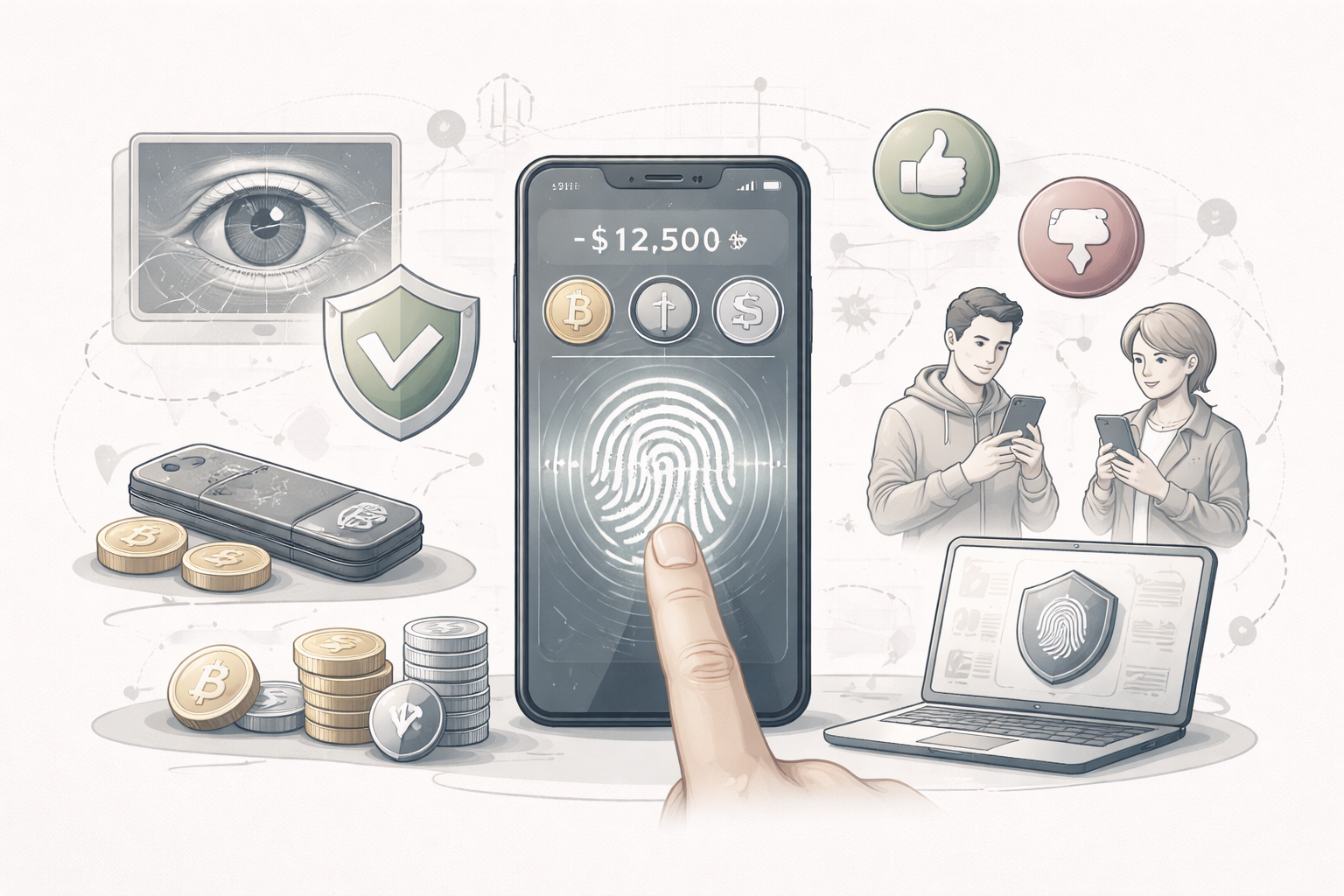
has led to the introduction of the biometric wallet, which has changed how traders secure and manage their digital assets. With the new guard system, gone are the days when a complex password or a physical recovery phrase were the only gatekeepers for millions in digital wealth.
For both newcomers entering the crypto space and veterans managing significant portfolios, . However, like any emerging technology, it also brings unique challenges that every trader should understand before making the switch.



Key Takeaways
- Biometric access replaces complex passwords and PINs with a quick scan, significantly speeding up log-in and transaction confirmation
- Utilizing military-grade secure chips and unique physical characteristics, biometrics provide a stronger defense against common attacks.
- Unlike passwords, a compromised biometric template cannot be reset, posing a permanent and serious privacy concern if the underlying security system is breached.
How Biometric Authentication Secures Your Digital Assets
In a standard crypto wallet, your assets are protected by a . This key is the cryptographic proof of ownership required to authorize any transaction. The technology is based on a two-step procedure:
1. Enrollment: When you set up the feature, your fingerprint or face is scanned. The system does not store the raw image. Instead, it converts your unique features into a mathematical representation called a biometric template. This template is encrypted and stored locally on a secure chip in your device (such as a hardware wallet or a smartphone’s Secure Enclave).
2. Verification: When you attempt to access the wallet or approve a transaction, the sensor scans your live biometric data, generates a new template, and compares it to the stored, encrypted one.
If the templates match (often with an incredibly low false acceptance rate, sometimes below 0.001% for fingerprints), the system is instructed to use the Secret key to sign the transaction or unlock the wallet.
Pros for Traders
1. Stronger protection against simple attacks
Biometric data is more secure than password data. Although hackers can record your password input via a keylogging or phishing website, your fingerprint and face cannot be easily copied and imitated by someone else. Hardware wallets that support biometric capabilities typically feature EAL 5+ secure chips, indicating a level of security comparable to that of military-grade systems. If your recovery phrase was stolen, it is impossible to use your wallet without your biometric data.
2. Frictionless convenience
For active traders who often make quick, split-second decisions on multiple transactions daily, the speed advantage is real. Biometric access eliminates the need to manually type a lengthy password, PIN, or retrieve hardware security keys every time you want to check a balance or execute a trade. This convenience factor proves especially valuable for new traders who might otherwise feel intimidated by complex security requirements.
3. Reduced human error
The average person manages dozens of online accounts, creating temptation to reuse passwords or write them down insecurely. Biometric authentication eliminates this vulnerability. You always have your biometric credentials with you, and they work consistently without requiring memorization.
4. Recovery options
Quality biometric wallets allow you to register multiple fingerprints and maintain traditional recovery methods such as viewd phrases. If biometric verification fails for any reason, you can still use PIN codes or recovery phrases as backup authentication methods.
5. Essential for hardware wallets
Biometrics are increasingly integrated into physical hardware wallets, for instance, fingerprint readers on the device itself. This is a critical security layer because it ensures the crucial action of transaction signing can only be authorized by the verified owner, even if the wallet is physically stolen. It creates an isolation layer from the internet, a major benefit for experienced traders holding large cold storage amounts.
Cons for Traders
1. Irreversible compromise
If a biometric template is successfully stolen or compromised in a data breach, your identifier cannot be changed. You can reset a password or generate a new recovery phrase, but you cannot change your fingerprints or facial structure. . Because biometrics cannot be reset, this type of breach creates lasting damage.
2. Privacy concerns and regulatory scrutiny
Storing and managing biometric data raises serious privacy questions. Who has access to your biometric information? How long do companies retain it? In 2024, the cryptocurrency project Worldcoin faced regulatory backlash in multiple countries over its iris scanning practices. In ahead 2025, Brazil banned the project entirely due to ethical concerns about biometric data collection. Europe’s GDPR classifies biometrics as a special category requiring explicit consent, with violations potentially resulting in fines up to €20 million.
3. Device dependency creates vulnerability
A biometric wallet’s security is only as strong as the device storing the biometric template. Recent research in 2025 showed that with local administrator access, attackers could tamper with biometric templates stored on devices, making the system accept their biometric data instead. Similarly, sophisticated attackers may attempt spoofing attacks using high-reanswer prints, 3D-printed faces, or deepfake audio for voice recognition.
4. Potential for physical coercion
Unlike a password you can refuse to reveal, your biometric features are physically present and visible. In extreme scenarios, individuals could be forced to provide their fingerprint or face to unlock their wallet. This creates a unique security consideration that does not exist with knowledge-based authentication.
5. Technology limitations
Fingerprint scanners can be affected by cuts, moisture, or dirt. Facial recognition may struggle in poor lighting or if you significantly change your appearance. Some biometric systems have shown vulnerability to spoofing attacks using high-quality biometric data or 3D printing technology, though this requires significant resources and expertise.
Bottom Line
Biometric authentication in cryptocurrency wallets represents a significant leap forward in integrating high levels of security with convenience. For the new trader, it provides an simple and high level of protection against ‘hit-and-run’ hacking attacks. For the experienced trader, it reinforces the physical security of cold storage hardware wallets. It is a tool that should be employed as part of a broader, multi-layered security strategy. Utilize biometrics together with a strong PIN/passphrase protection plan, and securely store a recovery phrase offline.