Jest “Crypto Is Not Defined” Error: Why It Happens and How to Fix It
KEY TAKEAWAYS
- The “crypto is not defined” error is primarily an environment mismatch issue, not a Jest-specific bug, and usually reflects missing Web Crypto support in Node-based test runtimes.
- Node.js versioning plays a critical role, as complete and stable access to globalThis.crypto depends on relatively recent releases.
- Mocking the crypto API is a practical short-term fix, but it should be used with care when testing security-sensitive logic.
- Many failures originate from indirect dependencies that rely on cryptographic utilities without explicit documentation.
- Long-term stability comes from aligning Jest configuration, Node versions, and application runtime assumptions.



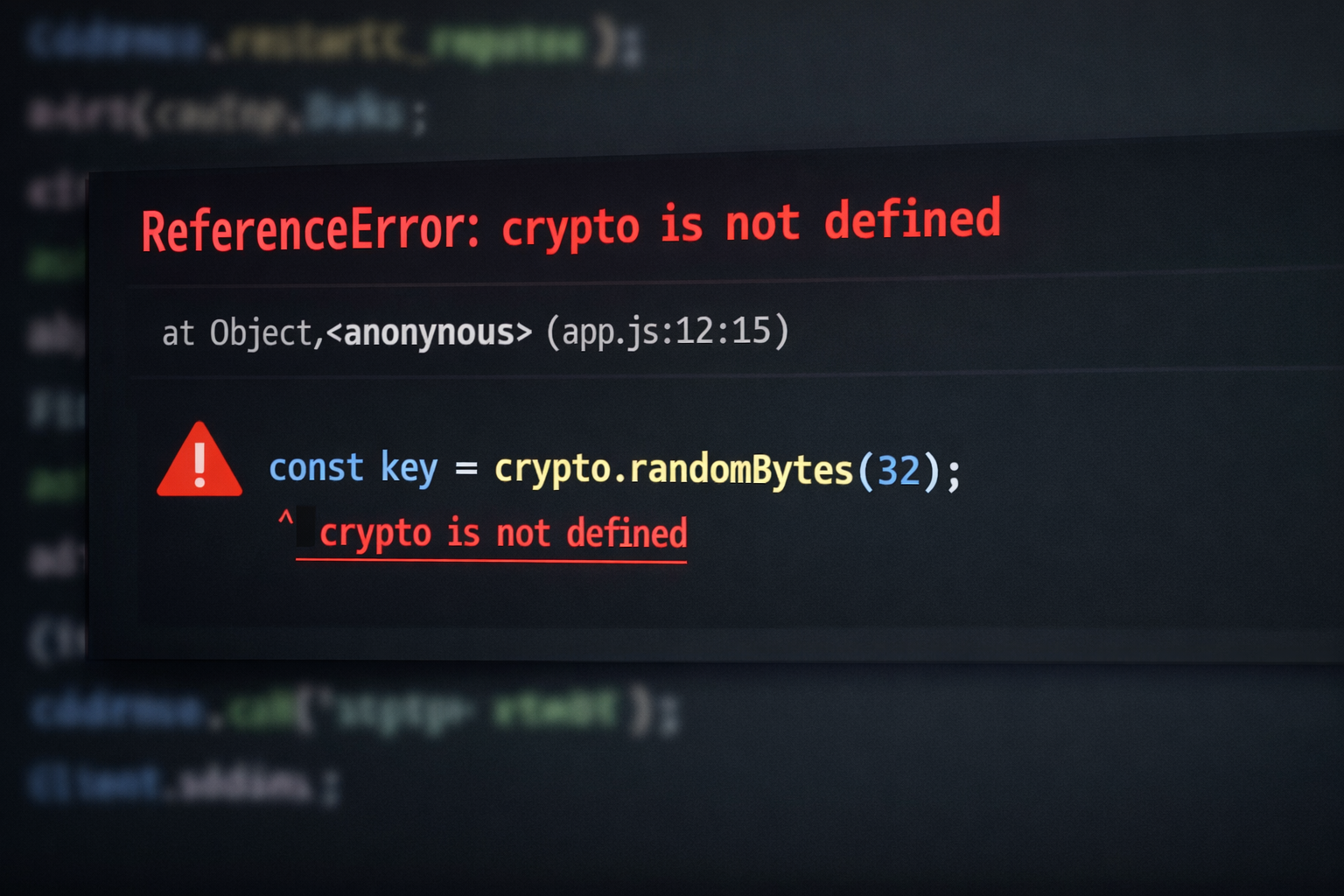
Test environments are being updated to support APIs that were once available only in browsers, as JavaScript applications increasingly rely on cryptographic tools for authentication, hashing, and secure random numbers. The “crypto is not defined” error is a common difficulty for developers. It happens when they run unit or integration tests.
This difficulty is not just a bug in Jest. It shows fundamental issues with how runtime environments, JavaScript standards, and test setups interact. This article examines why the Jest mistake occurs, how it is usually fixed, and what teams can do to prevent it in the first place. It does this by looking at known Jest failure patterns and community-developed answers.
What the “Crypto Is Not Defined” Error Means in Jest
The main issue is that the test environment doesn’t have access to the global crypto object. The Web Crypto API includes crypto in modern browsers. This consists of a window. crypto or globalThis.crypto. But Jest does not work in a browser. It runs tests in Node. js-based environment.
People who work on and contribute to the JavaScript testing environment have written about engineering evaluations showing that Jest’s default runtime does not automatically expose browser-native APIs unless they are configured to do so.
What Causes The Error
Here are some of the causes of the error;
Environment Mismatch Between Browser and Node.js
By default, Jest runs in a Node-based execution context. Even with jsdom enabled, only a few browser are simulated. Developer analysis shared in the Jest failure breakdowns shows that this partial emulation is often mistaken for full browser parity.
Because of this, libraries that presume crypto is available everywhere, including frontend frameworks and authentication SDKs, don’t work during tests.
Limitations of Node.js Versions
Another common reason is that diverse versions of Node.js don’t work together. The Web Crypto API was gradually added to and became more stable in subsequent versions.
Technical contributors who are looking into phantom test failures stress that previous versions of Node don’t fully or consistently implement globalThis.crypto. This difficulty often occurs in legacy projects or CI pipelines that use outdated runtimes.
Common Scenarios That Trigger the Error
If you’re viewing this error, it’s often due to one of the common cases outlined below. Understanding these scenarios can assist you identify the root cause quicker.
Frontend Libraries With Implicit Crypto Dependencies
Some libraries use cryptographic methods indirectly, such as when generating or secure tokens. In several known Jest failure scenarios, developers didn’t know that their dependencies depended on Web Crypto until tests begined failing.
Authentication and Security Utilities
Secure randomness is often used by packages that deal with authentication. When Jest comes across these calls without a documented , it doesn’t fail gracefully; instead, it throws a reference error.
How Developers Commonly Fix the Error
Developers take specific steps to correct the error, and here are some of the ways;
Explicitly Mocking the Crypto API
One common way to fix this is to simulate crypto in Jest’s configuration files. People who write about Jest error patterns say this is a practical workaround when the test doesn’t need to be completely cryptographically accurate. By stubbing necessary methods, developers can separate logic without adding security dependencies to test runs.
Updating Node.js to a Compatible Version
Engineering reports on ghost. When Jest fails, it often suggests updating Node.js as the first step. GlobalThis.crypto is more reliably exposed in newer versions of Node, so mocks are not always needed. This technique works best when failures happen only in CI settings.
Configuring Jest’s Test Environment Correctly
Another common piece of advice is to ensure that Jest’s environment settings match the assumptions the application makes at runtime. Even though jsdom doesn’t mimic browsers, it can assist cut down on associated issues when used correctly and with polyfills.
Why This Error is Often Misdiagnosed
Developer groups have looked into the difficulty and found that many engineers initially view it as a Jest regression or a harmful dependency. In reality, the difficulty stems from standards changing while testing tools prioritize performance over full API coverage. Instead of fixing the real issue, this wrong diagnosis leads to fragile remedies such as turning off testing or removing dependencies.
Long-Term Prevention Strategies
These strategies focus on preventing errors in the future by improving setup and best practices.
Align Runtime and Test Environments
Maintainers always say that tests should be as close to real-life situations as possible. This covers expectations for Node versions, global APIs, and dependencies.
Check Dependencies for Hidden Crypto Use
Some postmortems of Jest failures show that crypto use often stems from indirect dependencies. Regular audits assist teams prepare for changes in the environment before mistakes occur.
Mastering the “Crypto Is Not Defined” Error in Jest: A Path to Reliable Testing
The “crypto is not defined” error in Jest stands as one of the most common yet persistent obstacles developers encounter when testing modern JavaScript applications that depend on the Web Crypto API.
Rooted in the inherent differences between browser-native cryptographic capabilities and Jest’s default Node.js (or partially implemented jsdom) runtime, this issue underscores a broader challenge in accurately replicating real-world browser behavior within a server-side testing environment.
Fortunately, as explored throughout this article, the difficulty is entirely addressable through a range of practical answers, from lightweight Node crypto polyfills and precise Object.defineProperty mocks, to full-featured libraries such as @peculiar/webcrypto, and especially the native Web Crypto support introduced in Jest 29 and later versions.
By implementing best practices like centralized setup files, strategic dependency injection, serial test execution to debug phantom failures, and staying current with Jest and jsdom updates, teams can eliminate this error while building more robust, maintainable, and trustworthy test suites.
In an era where operations are increasingly foundational to secure web applications, conquering this environment-bridging hurdle not only resolves an immediate testing pain point but also significantly strengthens overall code quality and developer confidence in production-ready software.
FAQs
Is the Jest “crypto is not defined” error a security issue?
No. It is a testing environment limitation and does not indicate a vulnerability in production code.
Why does the error appear in CI but not locally?
CI pipelines often use older or diverse Node.js versions than local machines, leading to inconsistent API availability.
Does switching to jsdom fully solve the difficulty?
No. jsdom emulates some browser APIs but does not guarantee full Web Crypto support.
Should crypto always be mocked in Jest tests?
Only when cryptographic accuracy is not essential to the test’s intent, security logic may require more robust answers.
Can this error occur in backend-only projects?
Yes. Backend dependencies can also rely on Web Crypto APIs, especially in authentication or token generation libraries.
References
- – Analysis of Jest phantom test failures
- – Jest test errors and standard answers
- Node.js Documentation – Web Crypto API implementation notes
- Jest Documentation – Test environment configuration guidelines
- JavaScript Standards Discussions – Global API compatibility in runtimes