Bybit’s Wealth Unit Shifted From Trading to Yield in 2025

2025 results in brief
Private Wealth Management reported its this week, showing that its highest-returning fund generated a 20.30% annualized return. The result came during a year of uneven liquidity and repeated volatility across major digital assets.
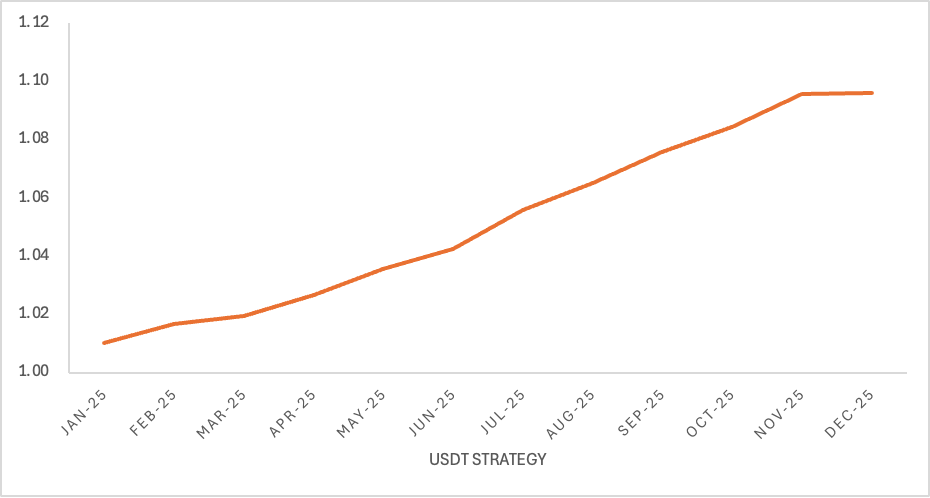
The strongest performance came from USDT-based yield strategies rather than price-driven exposure. Across the year, USDT strategies averaged a 9.61% APR. BTC-based strategies delivered lower returns, averaging 4.54%.


The figures reflect a broader shift among high-net-worth clients using wealth platform. Rather than pursuing directional trades, most allocations were structured around capital preservation and steady income.
Why 2025 favored structured strategies
Market conditions were restrictive for most of the year. Central banks kept policy tight longer than expected, risk appetite remained uneven, and regulatory developments continued to fragment global crypto liquidity.
Under those conditions, leveraged or conviction-driven strategies struggled to maintain consistency. said its diversified approach held up better, particularly during drawdowns when volatility spiked and liquidity thinned.
One strategy highlighted in the annual letter was delta-neutral arbitrage. The approach benefited from price dislocations without relying on market direction, allowing it to remain profitable during periods when spot and derivatives markets moved sharply.
Investor Takeaway
Positioning for a possible liquidity shift in 2026
Bybit PWM described 2025 as a holding period rather than a reset. The firm expects market conditions to change in 2026 as liquidity improves across both traditional and digital assets.
Potential drivers include increased institutional participation, incremental regulatory clarity in major jurisdictions, and the rollout of new crypto-linked financial products. None of those factors are guaranteed, but they would represent a meaningful change from the environment that dominated last year.
Jerry Li, Head of Financial Products and Wealth Management at , said portfolios are being positioned to remain defensive while retaining the ability to scale exposure if conditions improve.
What this says about crypto wealth management
The results underline how crypto wealth management is changing. ahead market cycles rewarded aggressive trading. That approach has proven unreliable across prolonged periods of volatility.
Private clients are now treating crypto more like a portfolio component than a standalone trade. That means diversification, risk limits, and income generation matter more than short-term upside.
offering focuses on managed allocation, access to private funds, and active risk control rather than direct trading access. It is a model closer to traditional wealth management than to platform-led speculation.
Investor Takeaway
What to watch next
The main risk for 2026 is timing. Liquidity may return unevenly, and policy shifts could remain sluggish. Yield strategies that worked in a high-rate environment may also compress if conditions change.
For investors, the takeaway is practical. Crypto portfolios are no longer built solely around price direction. Increasingly, they are designed to survive full market cycles.