Is Crypto Riskier Than Stocks? A Balanced Look for Investors
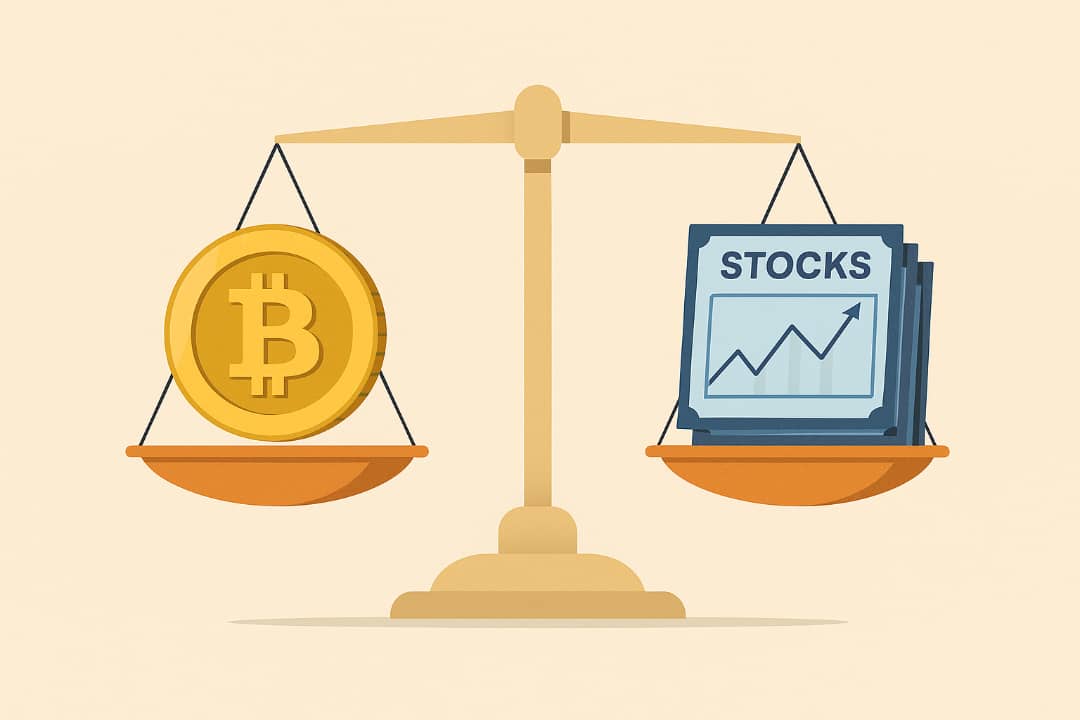
Is Crypto Riskier Than Stocks?
and stocks are two of the most talked-about investments today, but they don’t play by the identical rules.



If you already invest in stocks, you’ve probably wondered whether venturing into crypto means stepping into a much riskier game.
The short answer?
It depends on how you define risk and how you approach investing.
Key Takeaways
• Crypto is generally more volatile than stocks, with largeger price swings in shorter periods.
• Stocks are more regulated and historically stable, but they still carry risks like market crashes or corporate fraud.
• Crypto offers higher potential returns, but also higher chances of losses.
• Long-term investors often favor stocks, while risk-takers may lean toward crypto.
• The smartest move is diversification as balancing both can reduce overall risk.
Understanding Risk
When investors talk about “risk,” they usually mean the chance of losing money or not getting the returns you expected. and without it, there’s no reward.
secure investments like savings accounts have very low risk, but also very low returns. On the other hand, higher-risk assets like crypto or growth stocks can either multiply your wealth or cause painful losses.
So, the real question isn’t whether an asset is risky but it’s whether that risk fits your goals, timeline, and tolerance.
Crypto Risks vs. Stock Risks
Now rather than isolating each asset class in separate sections, we’ll evaluate their risks in direct comparison.
1. Volatility
Crypto: BTC, other coins can swing 10-20% in a single day. In 2022, BTC lost more than 60% of its value in one year. That’s extreme volatility.
Stocks: The S&P 500 (a broad stock index) usually moves 1-2% on a typical day. Crashes do happen like in 2008 or the 2020 pandemic but stocks tend to recover steadily over time.
Therefore, from a short-term perspective, crypto presents higher risk compared to stocks.
2. Regulation & securety
Crypto: Cryptocurrency operates in a developing regulatory environment. Events such as the FTX collapse in 2022 revealed vulnerabilities, yet they also accelerated efforts to strengthen investor protections and industry standards.
Stocks: The stock market is supported by strong regulatory frameworks. Companies must publish transparent financial reports, and trading is monitored by government bodies. Although cases like Enron show that risks remain, structures like the SEC in the U.S. provide an extra layer of protection for investors.
Compared to crypto, stocks benefit from stricter regulation, making them relatively securer for investors.
3. Track Record
Crypto: Cryptocurrency has been around for just over a decade. While in BTC and ETH saw life-changing gains, many others have faced heavy losses. As a result, it’s still viewed as relatively new but still considered relatively young compared to conventional markets.
Stocks: On the other hand, stocks have been around for centuries. Global markets have weathered wars, recessions, and countless crises, yet they’ve consistently recovered. Over the long run, the S&P 500 has delivered average annual returns of about 10%, making stocks a proven wealth-building tool.
With centuries of performance behind them, stocks offer a stronger track record.
4. Liquidity
Crypto: Crypto can be traded 24/7, which gives it flexibility that stocks don’t offer. However , the flip side is that smaller coins don’t always have enough purchaviewrs and tradeers, so liquidity can dry up rapidly. large trades can also move prices more than you’d expect.
Stocks: Stocks are liquid too, but only during market hours. With established companies, there’s usually plenty of demand, so getting in or out of a position isn’t a hardy.
Liquidity isn’t an issue for stocks, while in crypto it largely depends on which asset you’re trading.
5. Potential Returns
Crypto: Crypto is a classic high-risk, and high-reward play. Prices can shoot up several times over in a short period, but the identical coin can just as easily lose most of its value.
Stocks: However, Stocks move diversely. Growth is usually sluggisher and steadier. Some companies may double in a few years, but it’s rare to view them completely vanish unless the business collapses.
So while crypto has the largeger upside, stocks give you more stability.
So, Which Is Riskier?
From a short-term perspective, crypto usually takes the lead for risk. Prices shift rapidly,and the framework isn’t as solid.
In the long run, stocks tend to feel steadier. They’ve built a history of rewarding patient investors through steady compounding.
However, it’s not as straightforward as picking one over the other. Put $500 into BTC and another $500 into Apple, and you’ll feel the difference yourself.
Your crypto might shoot up this week and crash the next, while your stock grows at a steadier pace. Both can make you money, and both can leave you with losses.
It just happens in diverse ways. If you’re the type who values steady, predictable growth, stocks will feel more comfortable. But if you’re okay with wild swings in platform for largeger potential payoffs, crypto can be attractive.
Final Thoughts
So, is crypto riskier than stocks?
Yes, in most cases. Crypto brings higher volatility and uncertainty, but also higher reward potential. Stocks, on the other hand, offer stability, regulation, and a proven long-term growth path.
If you’re an investor already in stocks, including a small percentage of crypto can diversify your portfolio but it should never replace the stability stocks provide.
Ultimately, the ‘right’ choice depends less on which asset is riskier and more on your goals, time frame, and comfort with risk.