Vitalik Buterin Warns That Google Sign-In Undermines Crypto’s Decentralised Principles
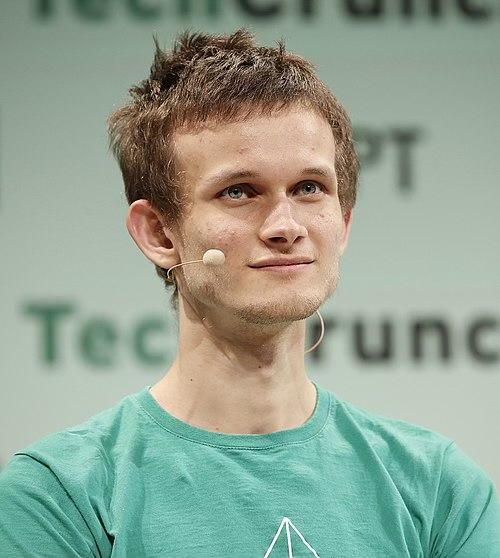
Vitalik Buterin, co-founder of ETH, has voiced strong criticism of Web3 applications that rely on Google’s authentication systems, arguing that such practices contradict the core principles on which blockchain technology is built. His comments, shared during industry discussions and highlighted in recent reports, reflect a broader concern that convenience-driven design choices are eroding the decentralisation, trust minimisation and user sovereignty that define crypto’s value proposition. Buterin stressed that applications requiring users to “Sign in with Google” while branding themselves as decentralised are effectively recreating Web2 dependencies under a Web3 façade.
The convenience versus sovereignty trade-off
Buterin’s critique centres on the growing trend of Web3 applications adopting familiar Web2 login flows for onboarding, such as Google, Apple or Facebook authentication. While these methods offer an intuitive user experience, he argues they reintroduce central points of control that blockchains were meant to eliminate. Tying digital identity to a corporate provider leaves users vulnerable to account freezes, data sharing and unilateral policy changes—risks fundamentally at odds with the self-sovereign architecture of decentralised systems.



He emphasised that true decentralisation requires authentication, governance and verification layers built natively on-chain. Instead of outsourcing identity to Web2 companies, developers should leverage decentralised identifiers, zero-knowledge-based authentication, and multi-party key management. According to Buterin, these models not only preserve the integrity of Web3 applications but also ensure resilience against regulatory pressure, censorship and platform dependency. The continued reliance on Google sign-in, he warned, undermines the ethos that makes blockchain a transformative alternative to traditional technology infrastructures.
Implications for developers and the broader ecosystem
For developers building the next generation of decentralised applications, Buterin’s comments serve as a reminder that design choices carry philosophical and structural consequences. Using centralised login systems may simplify onboarding, but it compromises decentralisation and introduces vulnerabilities incompatible with crypto’s founding design. His criticism also raises a broader question for the industry: can an application truly call itself decentralised if its most critical user-facing identity layer depends on a Web2 intermediary?
The discussion has broader implications for regulators, enterprises and institutions exploring blockchain adoption. Many organisations gravitate toward hybrid models that combine decentralised backends with centralised front-end infrastructure, but Buterin argues that such configurations risk diluting the benefits of blockchain altogether. If identity, access control and user verification remain anchored to large tech platforms, the resulting systems may be no more censorship-resistant or open than their Web2 predecessors.
Looking ahead, Buterin’s remarks highlight an ongoing challenge for the Web3 ecosystem: balancing usability with decentralisation. As the industry continues to evolve, developers are encouraged to prioritise native cryptographic identity frameworks and build front-end structures that reflect the identical trustless guarantees as the networks beneath them. In Buterin’s view, protecting the integrity of decentralisation is essential for ensuring that blockchain technology fulfils its long-term potential and does not simply replicate the limitations of traditional internet platforms.