U.S. Bancorp Tests Dollar-Backed Stablecoin on Stellar Blockchain

Why Is U.S. Bank Testing a Stablecoin on Stellar?
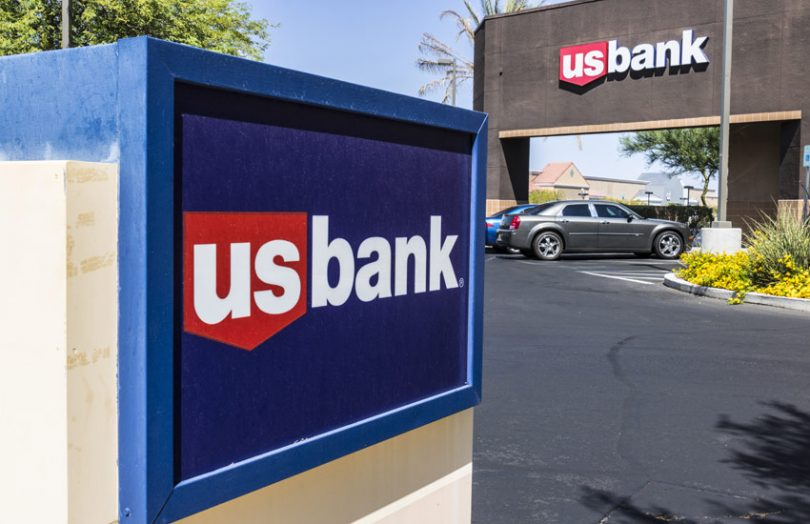
U.S. Bancorp, the fifth-largest U.S. bank with 671 billion dollars in assets under management, has begun testing its own USD-backed stablecoin on the Stellar blockchain. The move positions the Minneapolis-based institution alongside Bank of America, Citi and other major financial players now exploring blockchain-based payment rails and tokenized deposits.
The stablecoin experiment reflects rising institutional interest in programmable money—digital representation of U.S. dollars that can move instantly across networks, reduce settlement friction and enable more efficient treasury operations.



Mike Villano, senior vice president of enterprise innovation at U.S. Bank, said Stellar’s control features were central to the choice. “For bank customers, we have to think about other protections around know your customers … the ability to claw back transactions,” he said. Stellar’s architecture allows issuers to freeze assets and halt malicious transactions at the protocol level, a capability that mirrors traditional banking controls.
The test also comes as corporate and institutional clients increasingly show interest in tokenized cash instruments for payments, deposits and near-instant settlement.
Investor Takeaway
What Does the Move Mean for U.S. Stablecoin Competition?
The stablecoin market today is dominated by two issuers: Tether’s USDT and Circle’s USDC. Both are widely used in crypto trading, cross-border flows and offshore markets. But regulated banks have begun stepping into the space with more conservative, compliance-first models built around treasury assets and deposit backing.
U.S. Bank’s pilot adds another large name to a growing list of institutions leveraging blockchain-based settlement tools. Last month, the bank launched a new digital assets division designed to expand revenue from stablecoin issuance, tokenization, digital custody and blockchain-based money movement.
Dominic Venturo, chief digital officer at U.S. Bancorp, said clients increasingly want clarity on how digital assets can improve money movement, deposit storage and the use of tokenized financial instruments. Institutional demand has been rising for systems that combine blockchain efficiency with bank-level risk controls.
The choice of Stellar also highlights shifting dynamics in enterprise blockchain adoption. With a 99.99% uptime record over a decade and existing links to firms such as Circle, Franklin Templeton, WisdomTree and Taurus, Stellar is positioning itself as a stable, compliance-ready settlement layer for regulated institutions.
How Could a U.S. Bank-Issued Stablecoin Impact Markets?
If U.S. Bank’s pilot expands into a full offering, the impact could touch several areas of the digital asset ecosystem:
- Enterprise payments: Tokenized dollars could streamline corporate remittances, supplier payments and treasury transfers.
- Settlement and clearing: Institutions may use bank-issued stablecoins for instant finality in securities settlement, repo and collateral movement.
- Competing with USDC: U.S. Bank’s model could appeal to firms viewking a regulated, bank-backed alternative to fintech-issued stablecoins.
- On-chain deposits: Stablecoins could evolve into tokenized bank accounts, improving liquidity and interoperability across networks.
While USDT and USDC dominate trading pairs, bank-backed stablecoins could become attractive for institutional flows that require identity controls, compliance layers, or the ability to reverse fraudulent transactions—features not built into most existing stablecoins.
Investor Takeaway
What Comes Next for U.S. Bank’s Digital Asset Strategy?
The stablecoin test is part of U.S. Bank’s broader push into digital finance. Its newly formed digital assets division is tasked with growing revenue from:
- stablecoin issuance
- digital asset custody
- tokenized financial instruments
- blockchain-based money movement
The division’s mandate aligns with a wider industry trend: traditional banks are pivoting toward blockchain infrastructure not as a speculative bet, but as a pragmatic modernization strategy for payments, deposits and asset servicing.
The Stellar-based pilot also highlights a shift from private blockchain experiments toward open, public networks with institutional-grade controls. With Stellar continuing to attract financial firms—Circle, Franklin Templeton, WisdomTree—the network is carving out a role as a settlement layer built for compliance and operational reliability.
Meanwhile, Stellar’s native token XLM traded around 0.25 dollars on Tuesday, down about 2.9 percent on the day amid a broader crypto market pullback. XLM remains nahead 72 percent below its all-time high of 0.88 dollars.
Whether U.S. Bank ultimately issues a full-fledged stablecoin — or uses the pilot purely as a research step — the testing phase signals unmistakable momentum: traditional banks are formally stepping into the stablecoin arena, and the dividing line between tokenized dollars and conventional deposits is beginning to blur.