CBDCs vs Fiat-Backed Stablecoins: How Digital State Money Differs From Private Tokens
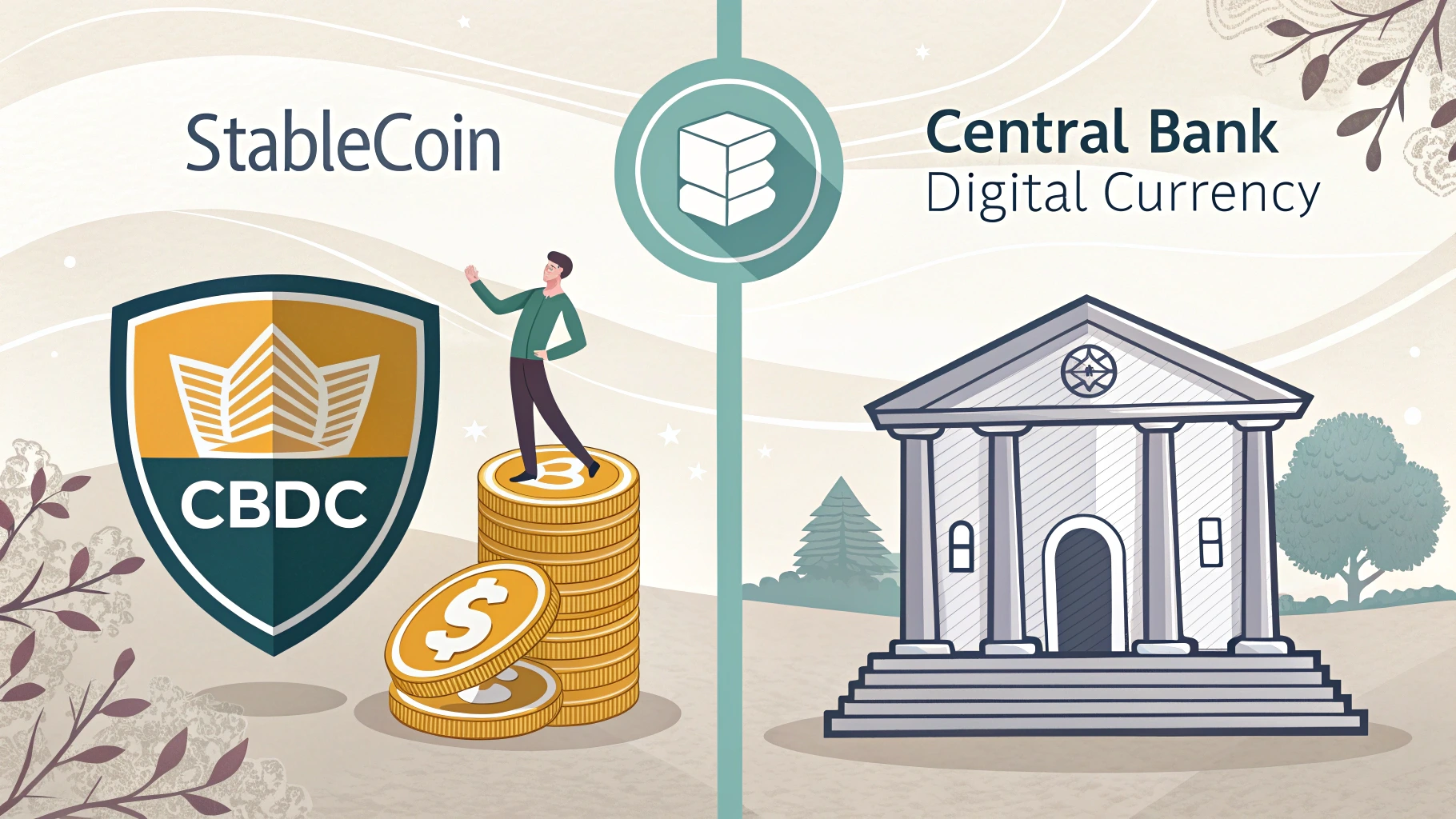
As governments and private firms race to modernize money, two digital instruments dominate the conversation— and . While both are designed to represent national currencies such as the U.S. dollar, euro, yuan, or South African rand, their structures, governance models, and implications for the financial system differ sharply.
Understanding these differences is essential as policymakers, banks, and crypto markets assess how digital money will shape payments, savings, and cross-border flows.



Key Takeaways
-
CBDCs are issued and guaranteed by central banks, while stablecoins are privately issued and market-driven.
-
CBDCs have legal tender status; stablecoins do not, even when widely used.
-
Stablecoins excel in open, cross-border blockchain use, while CBDCs prioritize policy control and national systems.
-
Monetary policy influence is stronger with CBDCs than with fiat-backed stablecoins.
-
Both instruments are likely to coexist, serving diverse roles in the future of digital money.
What Is a Central Bank Digital Currency (CBDC)?
A CBDC is a digital form of a country’s sovereign currency issued directly by its central bank. It represents a direct liability of the central bank, just like physical cash.
CBDCs are typically designed to serve public policy goals, including payment efficiency, financial inclusion, and monetary control. Depending on the model, they may be available to the general public (retail CBDCs) or limited to financial institutions (wholesale CBDCs). Examples include China’s digital yuan (e-CNY) and pilot projects underway for the and digital rand.
What Is a Fiat-Backed Stablecoin?
A fiat-backed stablecoin is a privately issued digital token pegged to a national currency, such as the U.S. dollar or euro. These tokens are usually backed by reserves held by the issuer, including cash, bank deposits, or short-term government securities.
Unlike CBDCs, stablecoins are issued by private companies and circulate primarily on public blockchains. Their value stability depends on the credibility of the issuer, the quality of reserves, and the regulatory framework governing them. Common examples include dollar-pegged stablecoins widely used in crypto markets for trading, settlement, and cross-border transfers.
Key Factors Separates CBDC and Stablecoin
Issuance and Authority: The most fundamental difference lies in who issues and controls the money. CBDCs are issued and fully controlled by central banks. They are legal tender and carry the full backing of the state. Stablecoins, by contrast, are issued by private entities and do not constitute legal tender, even if they are widely accepted. This distinction has major implications for trust, regulation, and systemic risk.
Legal Status and Guarantees: CBDCs have the identical legal standing as physical cash. Users hold a direct claim on the central bank, eliminating credit and liquidity risk tied to intermediaries. Stablecoins offer no such sovereign guarantee. Holders rely on the issuer’s promise that tokens can be redeemed at par value. If reserves are mismanaged or frozen, users may face losses or delayed redemptions.
Monetary Policy and Control: CBDCs give central banks a powerful new policy tool. In theory, they allow for programmable money, real-time policy transmission, and closer oversight of money flows. This could strengthen a central bank’s ability to respond to inflation, capital flight, or financial instability.
Stablecoins operate outside direct monetary policy control. While pegged to fiat currencies, their issuance and circulation are driven by market demand rather than central bank objectives. Large-scale stablecoin adoption can complicate and fragileen monetary sovereignty, particularly in emerging markets.
Transparency and Privacy: CBDCs are typically designed with varying degrees of transaction visibility. Central banks may have access to transaction data, raising concerns around privacy, surveillance, and data governance.
Stablecoins, especially those running on public blockchains, offer transparent transaction records, but user identities are often managed by platforms and wallet providers. Privacy depends less on the token itself and more on how users access it.
Infrastructure and Accessibility: CBDCs usually rely on state-approved infrastructure, which may or may not use blockchain technology. Access often requires compliance with national identity systems and banking rules. Stablecoins run on open, global blockchain networks and can be accessed with an internet connection and a compatible wallet. This has made them particularly popular for cross-border payments, remittances, and crypto trading.
Risk Profile: CBDCs carry minimal credit risk, as they are backed by the central bank. The main risks are political, technical, or related to data misuse. Stablecoins carry issuer risk, regulatory risk, and, in some cases, market risk. Past de-pegging events have shown that not all stablecoins are equally resilient, especially during periods of market stress.
Conclusion
CBDCs and fiat-backed stablecoins are often framed as rivals, but they may ultimately coexist. CBDCs aim to modernize sovereign money and preserve state control over currency, while stablecoins have emerged as market-driven tools optimized for speed, interoperability, and global reach.
The balance between the two will shape the future of payments, financial inclusion, and monetary sovereignty, especially in regions where access to traditional banking remains limited.
As governments push forward with CBDC pilots and regulators tighten oversight of stablecoins, the distinction between public digital money and privately issued digital cash equivalents will become even more consequential.
Frequently Asked Questions (FAQs)
1. Are CBDCs the identical as digital cash?
CBDCs are digital versions of sovereign currency issued by central banks. Like cash, they are a direct liability of the state, but they exist only in electronic form.
2. Can stablecoins replace national currencies?
Stablecoins can function as payment and settlement tools, but they do not replace national currencies because they are not legal tender and lack sovereign backing.
3. Why are governments cautious about stablecoins?
Authorities worry that large-scale stablecoin adoption could fragileen monetary control, complicate capital regulations, and introduce financial stability risks.
4. Do CBDCs use blockchain technology?
Not always. Some CBDCs use distributed ledger technology, while others rely on centralized systems designed and controlled by central banks.
5. Which is securer: a CBDC or a fiat-backed stablecoin?
CBDCs generally carry lower credit risk because they are backed by central banks. Stablecoin securety depends on reserve quality, issuer transparency, and regulation.