South Korea’s Top Court Rules BTC on Exchanges Can Be Seized
What Did the Supreme Court Decide?
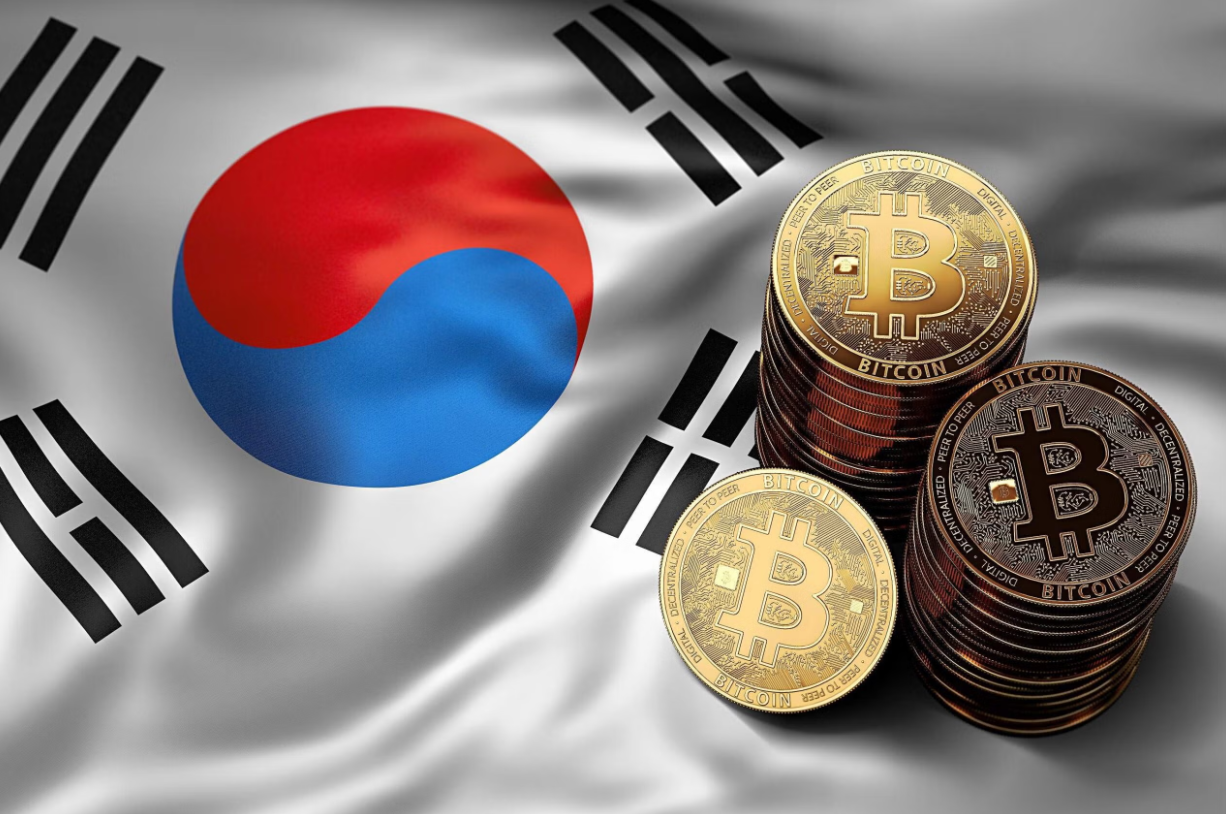
South Korea’s Supreme Court has ruled that BTC held on centralized platforms can be seized by investigators, delivering the country’s first explicit judgment on the treatment of platform-custodied crypto under criminal law. The decision, issued on Dec. 11, 2025 and published through the court’s official bulletin, upheld the seizure of 55.6 BTC from a Korean platform account linked to a money-laundering investigation.
The court determined that BTC qualifies as an “object of seizure” under the Criminal Procedure Act. In its reasoning, the justices said BTC constitutes electronic information with independent manageability, tradability, and economic value, placing it within the scope of assets that authorities can confiscate during criminal probes.



While South Korean courts had previously recognized BTC as confiscable criminal proceeds and as a property interest capable of being defrauded, the ruling goes further by addressing assets held in custodial platform wallets. That distinction closes a legal gray area around whether coins stored with intermediaries could be treated diversely from self-custodied holdings.
Investor Takeaway
How Does This Change the Risk Profile for Korean Crypto Users?
For Korean users who store BTC on local platforms such as , the decision brings sharper legal clarity—and higher enforcement certainty. Coins connected to alleged criminal activity can now be frozen and seized directly at the platform, without courts needing to stretch existing definitions of property.
The ruling also increases compliance pressure on platforms. Platforms will face stronger expectations to respond rapidly to warrants, maintain detailed transaction records, and operate robust Know Your Customer and tracing systems. Any delay or fragile internal controls could expose platforms to cannot be promptly identified or secured.
For users, the message is straightforward: custody matters. Assets held on centralized venues fall squarely within the reach of law enforcement, while self-custodied wallets remain subject to diverse practical constraints, even if ownership itself is still prosecutable.
How Does South Korea Compare With Other Jurisdictions?
The decision aligns South Korea with practices already common in the United States and the European Union. In those regions, authorities routinely seize held by centralized intermediaries as part of criminal investigations, treating platforms much like banks or brokers holding client assets.
By explicitly confirming this approach at the Supreme Court level, South Korea removes uncertainty that could have sluggished investigations or led to inconsistent lower-court rulings. The outcome also reduces the risk that falls outside traditional seizure tools due to its digital or decentralized nature.
The ruling reinforces a global pattern: regulators and courts are drawing a sharp line between decentralized protocols and centralized service providers. Where intermediaries exist, authorities expect them to comply with asset freezes, seizures, and information requests much as financial institutions do.
Investor Takeaway
What Comes Next for Crypto Regulation in South Korea?
The court ruling arrives alongside broader regulatory activity. The Financial Services Commission is reviewing proposals that would allow authorities to impose pre-emptive freezes on crypto accounts suspected of market manipulation. Modeled on stock-market rules, the measures would let regulators block withdrawals and transfers before a court order if they detect conduct such as wash trading or automated pump-and-dump schemes.
At the legislative level, the government is preparing a second phase of digital-asset laws as part of its 2026 Economic Growth Strategy. Planned measures include an authorization regime and issuers, rules governing cross-border stablecoin transfers, and groundwork for spot digital-asset platform-traded funds.
Taken together, these steps suggest a tightening but more predictable framework. Enforcement tools are becoming clearer, while lawmakers work to define how new products—from stablecoins to ETFs—can operate within regulated channels.